.png)
The data on recycling makes for uncomfortable reading. Only 9% of our plastic waste is recycled while another 22% is mismanaged and uncollected, laying unprocessed and polluting our waterways and ecosystem.
But, within that uncomfortable picture, something is shifting. A growing number of companies are rethinking not just how their products are made, but what happens to them at the end of their lives. At RE ZRO®, that question has been central to how we design impact protection from the very beginning. Aside from this, recycling plants continue to be opened across the country, with an emphasis on plastic recycling. It is important to paint the whole picture, the overwhelming statistics alongside the (sometimes more) valuable work being done to combat this.
.avif)
Why recycling alone isn’t enough
Despite living in an era of paper straws and a recycling bin outside every UK home, it is important to know where our products come from, how they were made and how they are recycled in order to truly understand where the problem lies.
The world produces over 400 million tons of plastic waste alone every year but plastic recycling sits at the lowest percentage of recycled material when compared with glass, aluminium and paper. Greenpeace UK survey found that UK households discard an estimated 90 billion pieces of plastic packaging annually - around 60 pieces per household, per week. Of that, only 17% is recycled domestically. Why is this?
The reasons are structural. Not all plastic products are in fact recyclable. Thermoset plastics form irreversible bonds resulting in a material that cannot be recycled. Composite plastics, bioplastics, and coated packaging all present similar problems. Even the plastics that can, in theory, be recycled tend to face practical barriers - contamination, cost, and a global infrastructure that just isn’t keeping up. Due to contamination, alongside the incorrect addition of non recyclable waste to your bin, a huge 525,000 tonnes of UK household recycling was rejected at point of sorting in 2019/20 alone. Washing our plastics before recycling is a simple step that makes a bigger difference than most people realise.
Furthermore, since the commercialisation of plastic in the 1950’s the mass production of plastic has accelerated to an eye watering 9.2 billion metric tons of waste, most of which ends up unrecycled. With plastic having an estimated half life of anywhere from 20 to 500 years, catching up feels like a heavy task.
Finally, we have the beast that is cost. Often, the cost of producing ‘virgin’ plastics (brand new plastics) is three times cheaper than buying recycled plastic. Virgin plastic is made straight from oil and gas found in the ground and makes up 95% of plastic in circulation. To cut a long story short, Recyclers simply do not make enough money to make it a viable business and unless they are supported by government initiatives, they are not a practicable source of income worth investing in.
These reasons are exactly why recycling alone can’t be the answer, and why biodegradability matters.
The role of biodegradable additives
Despite how it may seem coming from that last section, it’s not all doom and gloom.
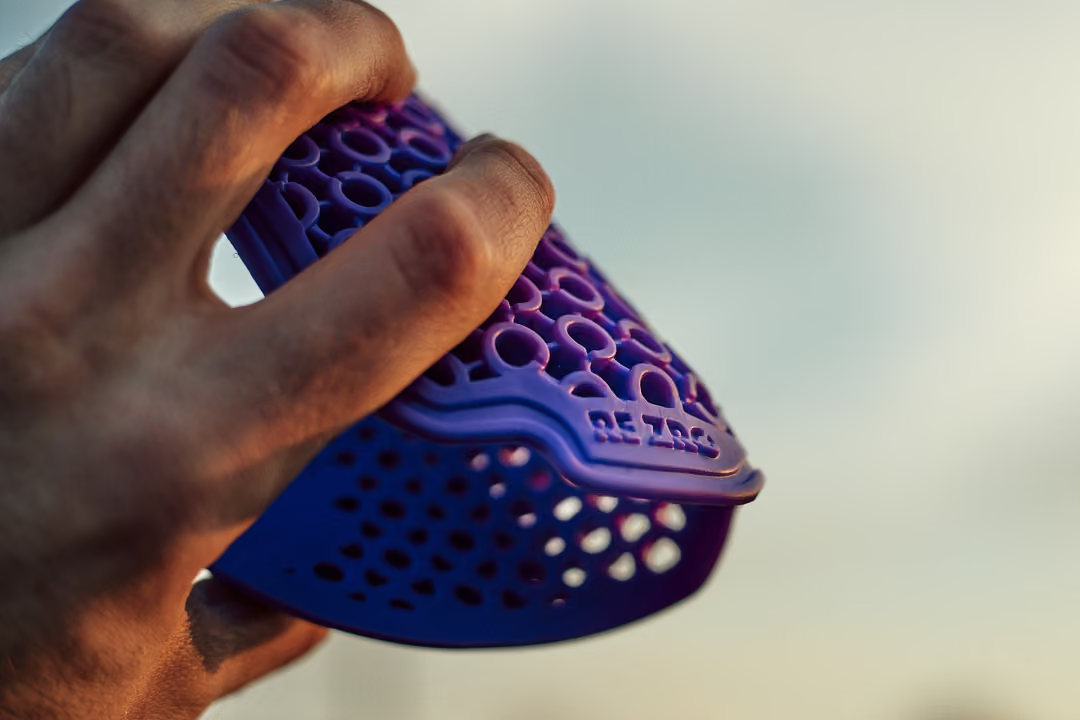
Research in the degradation of plastic has resulted in the creation of biodegradable additives that enhance the decomposition of polymers. This has opened a more viable path forward for us at RE ZRO®. Rather than relying on environmental factors - heat or sunlight - these additives allow microorganisms to take hold of the carbon within the polymer chain and turn this into energy. So instead of being degraded over tens of years, our armour is degraded* by microorganisms or bacteria through direct or indirect consumption in under 5 years.
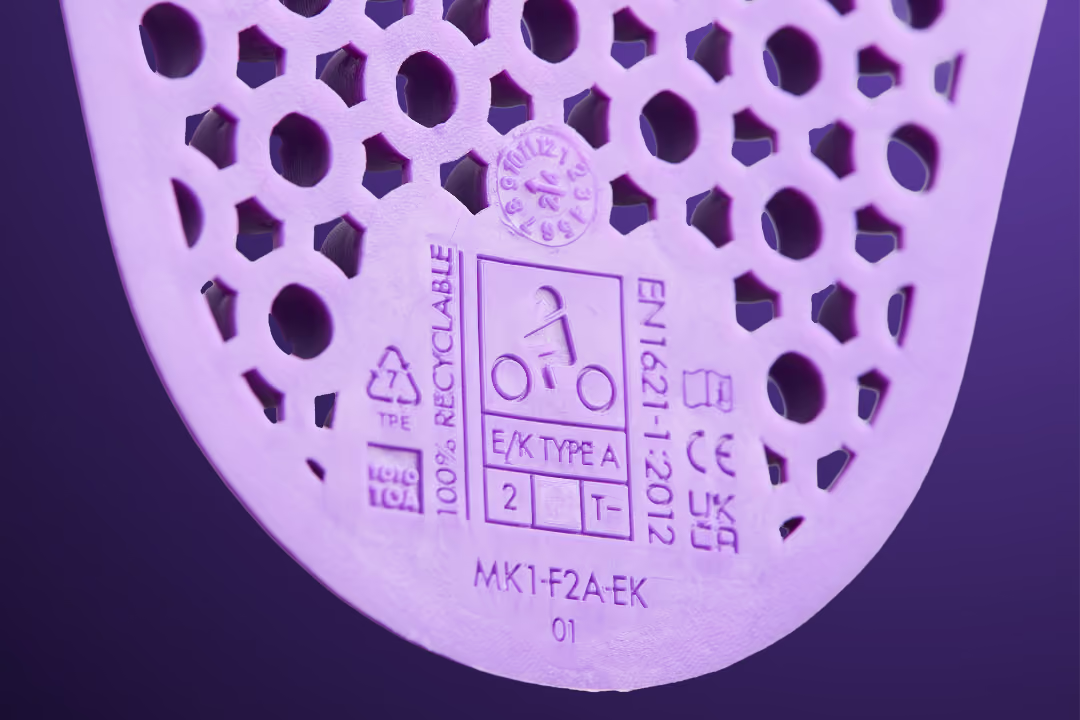
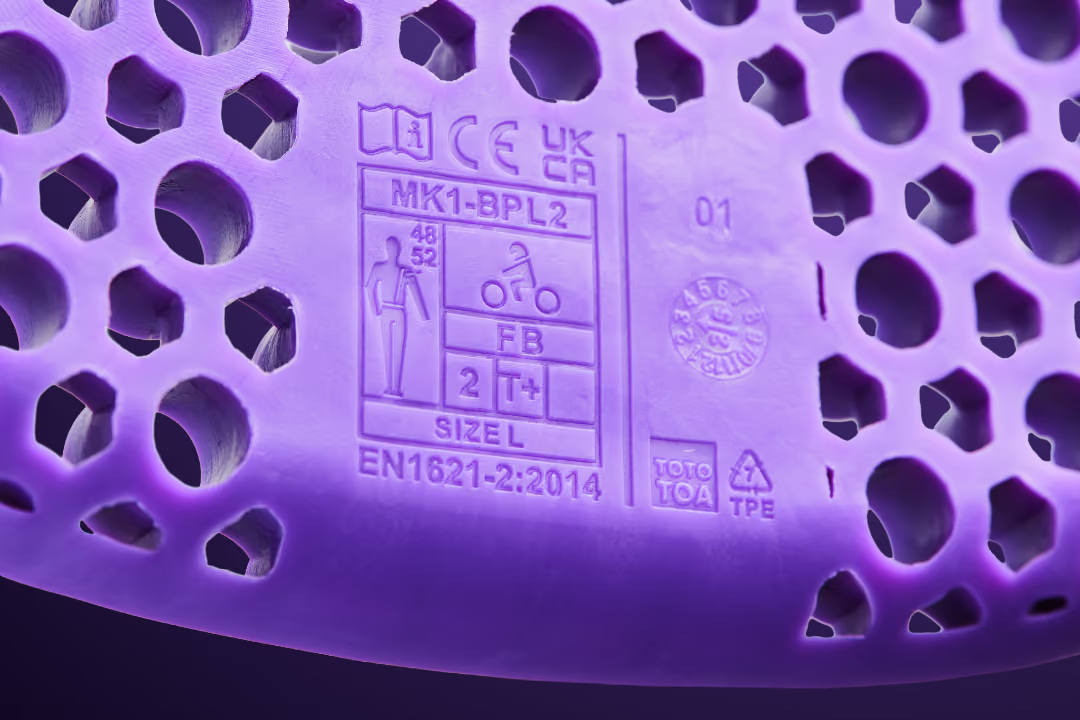
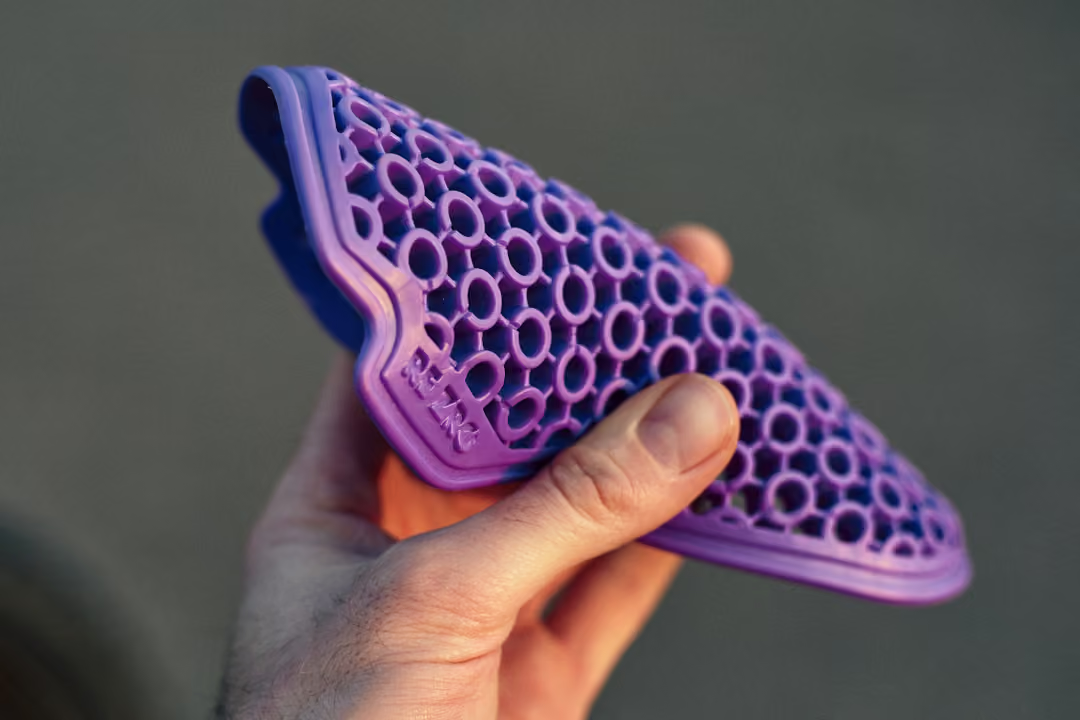
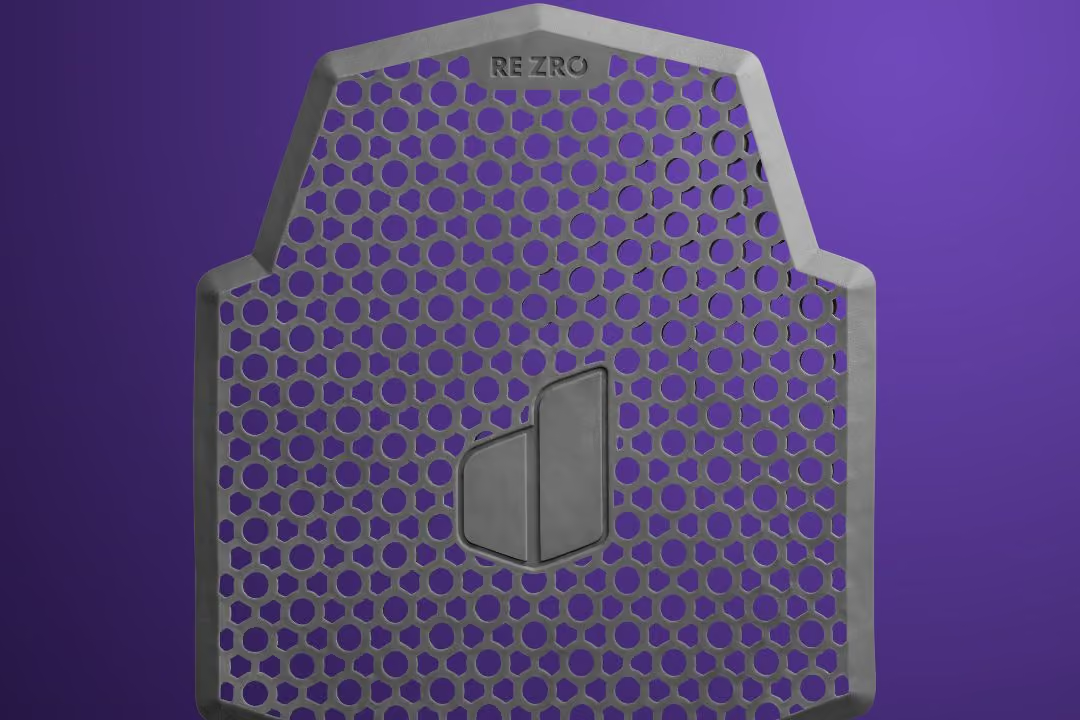
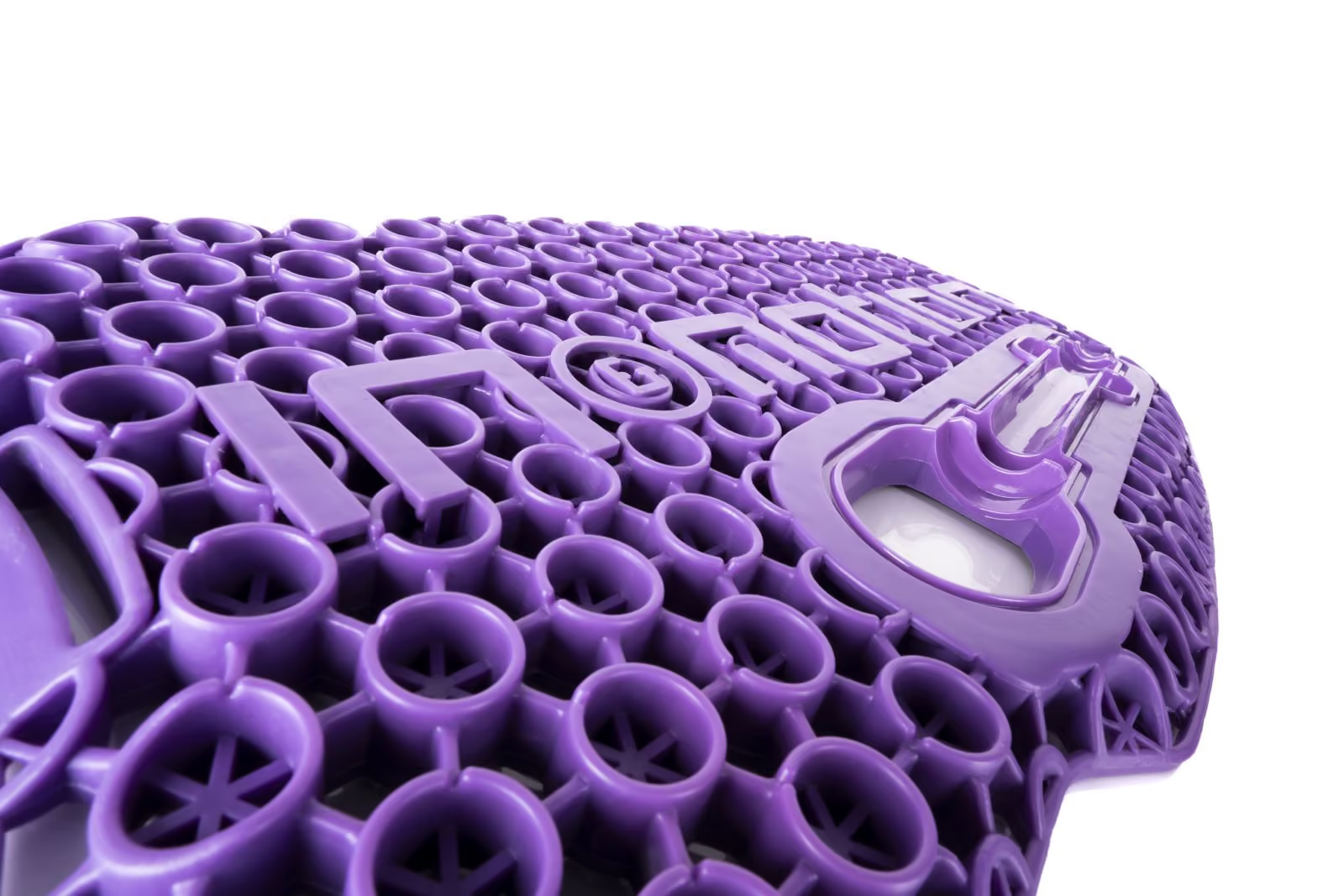
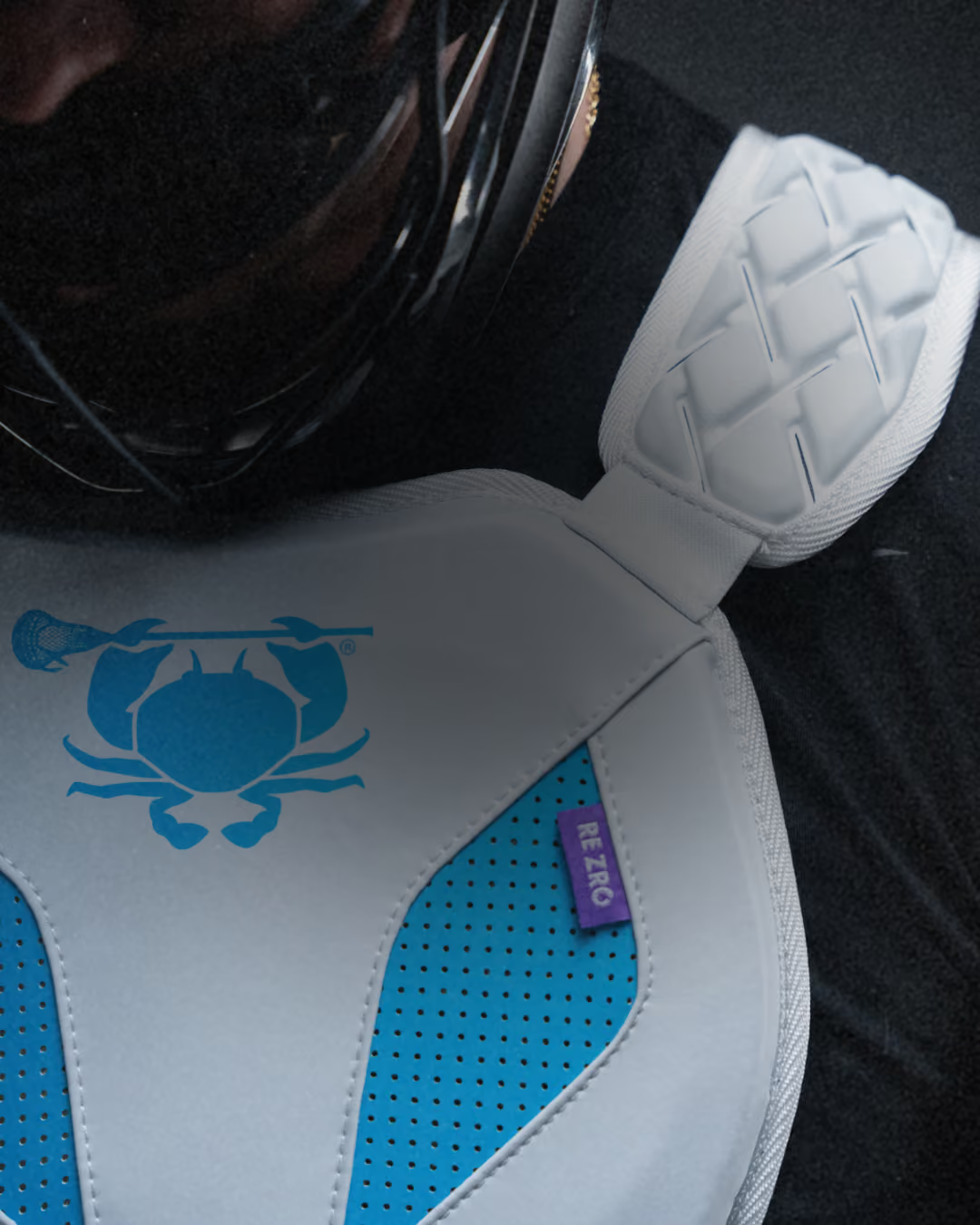
This is the technology that underpins our partnership with TOTO-TOA®. That collaboration has allowed us at RE ZRO® to develop a range of impact protections - across different applications, components, and markets (see our Materials Toolkit for more) - that are not only CE certified and PFAS free, but biodegradable* and recyclable** too. We are providing a solution for brands, they can replace their current materials or introduce something new that is sustainable, responsible and has end-of-life considerations baked into the design.
This doesn’t make the global recycling crisis disappear. But it does mean that when our materials do reach the end of their life, they don’t have to become part of the problem. Our work at RE ZRO® is proving that solutions are there. We aren’t the only ones doing this either, companies such as Bloom Biorenewables, Lignopure and Biome Bioplastics are innovating materials across beauty products, replacing fossil-based products, and takeaway coffee cups.
A different way to think about impact protection
At RE ZRO®, we’ve never believed that performance and sustainability have to be in conflict. Our armour is CE Level 1 and Level 2 certified, while simultaneously PFAS free, with post-consumer recycled content options, and (thanks to our partnership with TOTO-TOA®) biodegradable.
The global recycling crisis isn’t going to be solved by one material, or one company. It requires infrastructure investment, policy change, and a fundamental rethink of how products are designed. But material innovation is a meaningful part of that picture. We hope that by proving it is possible, other companies will be encouraged to move with us towards greener practices.
Impact Protection. Made Better.
To find out more about what we do at RE ZRO® and our efforts for sustainability, read more here.
**Ask your local recycling authority if recycling facilities are available for this type of product.
*RE ZRO® TPE material has been independently tested and achieves the biodegradability of 14.14% over 90 days in accordance with ASTMD5511-18 & ISO 15985 : 2014.
References
OECD (2022). Plastic pollution is growing relentlessly as waste management and recycling fall short, says OECD. [online] www.oecd.org. Available at: https://www.oecd.org/newsroom/plastic-pollution-is-growing-relentlessly-as-waste-management-and-recycling-fall-short.htm.
repurpose.global. (n.d.). Why Is Most Plastic Not Recycled? - Vacation - Webflow HTML website template. [online] Available at: https://repurpose.global/blog/post/why-is-most-plastic-not-recycled.
Parker, L. (2018). A whopping 91% of plastic isn’t recycled. [online] National Geographic. Available at: https://www.nationalgeographic.com/science/article/plastic-produced-recycling-waste-ocean-trash-debris-environment.
Clarke, L. (2019). Here’s the truth behind the UK’s biggest recycling myths. [online] Wired UK. Available at: https://www.wired.co.uk/article/recycling-myths-busted.
Greenpeace UK. (2021). What really happens to your plastic recycling? [online] Available at: http://greenpeace.org.uk/news/plastic-recycling-export-incineration/ [Accessed 31 Oct. 2022].
www.local.gov.uk. (n.d.). LGA: Over half a million tonnes of recycling is rejected at point of sorting | Local Government Association. [online] Available at: https://www.local.gov.uk/about/news/lga-over-half-million-tonnes-recycling-rejected-point-sorting.
Bose, K. (2021). ‘UK’s first’ £165m plastic recycling plant hits application status. [online] Energy Live News. Available at: https://www.energylivenews.com/2021/10/12/uks-first-165m-plastic-recycling-plant-hits-application-status/ [Accessed 31 Oct. 2022].
CGR. (2025) Global circularity rate fell to 6.9%—despite growing recycling [online] Available at:
https://circularity-gap.world/updates-collection/global-circularity-rate-fell-to-6-9---despite-growing-recycling / [Accessed 1 Jul. 2026]
Sedgwick, A. (2024). The UK’s Largest Plastic Waste Survey Reveals 1.7 Billion Pieces of Plastic Packaging Still Being Thrown Away by Households Weekly [online] Greenpeace. Available at: https://www.greenpeace.org.uk/news/the-uks-largest-plastic-waste-survey-reveals-1-7-billion-pieces-of-plastic-packaging-still-being-thrown-away-by-households-weekly/ [Accessed 1 Jul. 2026]
Reed, S. (2026). Plastic Recycling Plant to be One of UK’s Largest [online] available at: https://www.bbc.co.uk/news/articles/cwywe01eve0o [Accessed 1 Jul. 2026]
Tocco (2024). 7 Companies Doing Wonders With Bioplastics [online] Available at: https://tocco.earth/article/7-companies-bioplastics [Accessed 2 Jul. 2026]














.avif)













.avif)
.avif)









.avif)






.svg)
.svg)
