.png)
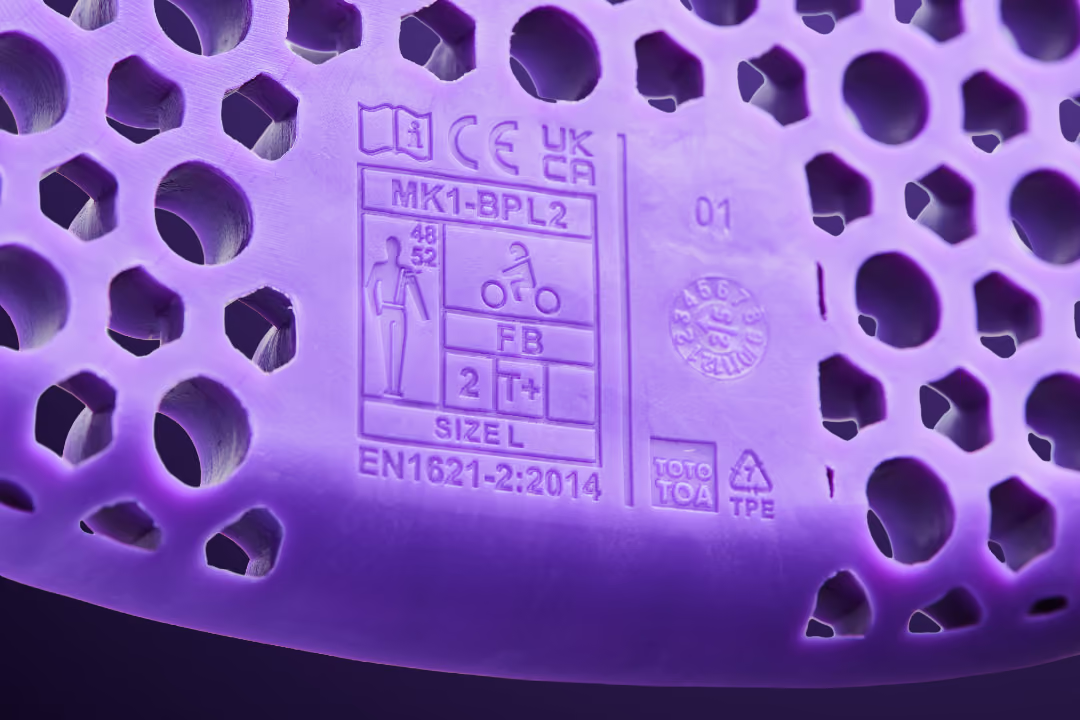
If you've ever picked up a piece of protective gear and seen a small "CE" logo stamped somewhere on the label, you've seen it in action. But for many, what goes into earning that mark, what it actually guarantees, or why it matters when you're choosing protective equipment can be a new concept.
This is our complete RE ZRO® guide to CE testing, with everything you need to know.
What is CE Testing?
CE stands for 'Conformité Européenne', or European Conformity, and it's a legal requirement for products in certain categories to be sold across the European Economic Area (EEA).
The CE Marking system sits under the New Legislative Framework (NLF) directives established by the European Commission. In simple terms, this is a set of rules that manufacturers across a huge range of industries - from toys to machinery to protective equipment - have to follow before they're allowed to sell into the European market.
For protective equipment specifically (which is where our armour comes in), CE marking falls under the Personal Protective Equipment (PPE) Regulation (EU) 2016/425. This sets out exactly how products like ours need to be designed, tested, and documented before they can be sold legally.
One important thing to note: CE testing is not quality testing. It doesn't tell you whether a product is comfortable, well made, or built to last. It only confirms that the item meets a minimum legal safety standard. A product can be CE marked and still be a poor fit, low quality, or not the best option for your needs - CE just means it's been through the required safety process. However, that is not the case with our armour (check out the testimonials on our website and see for yourself).
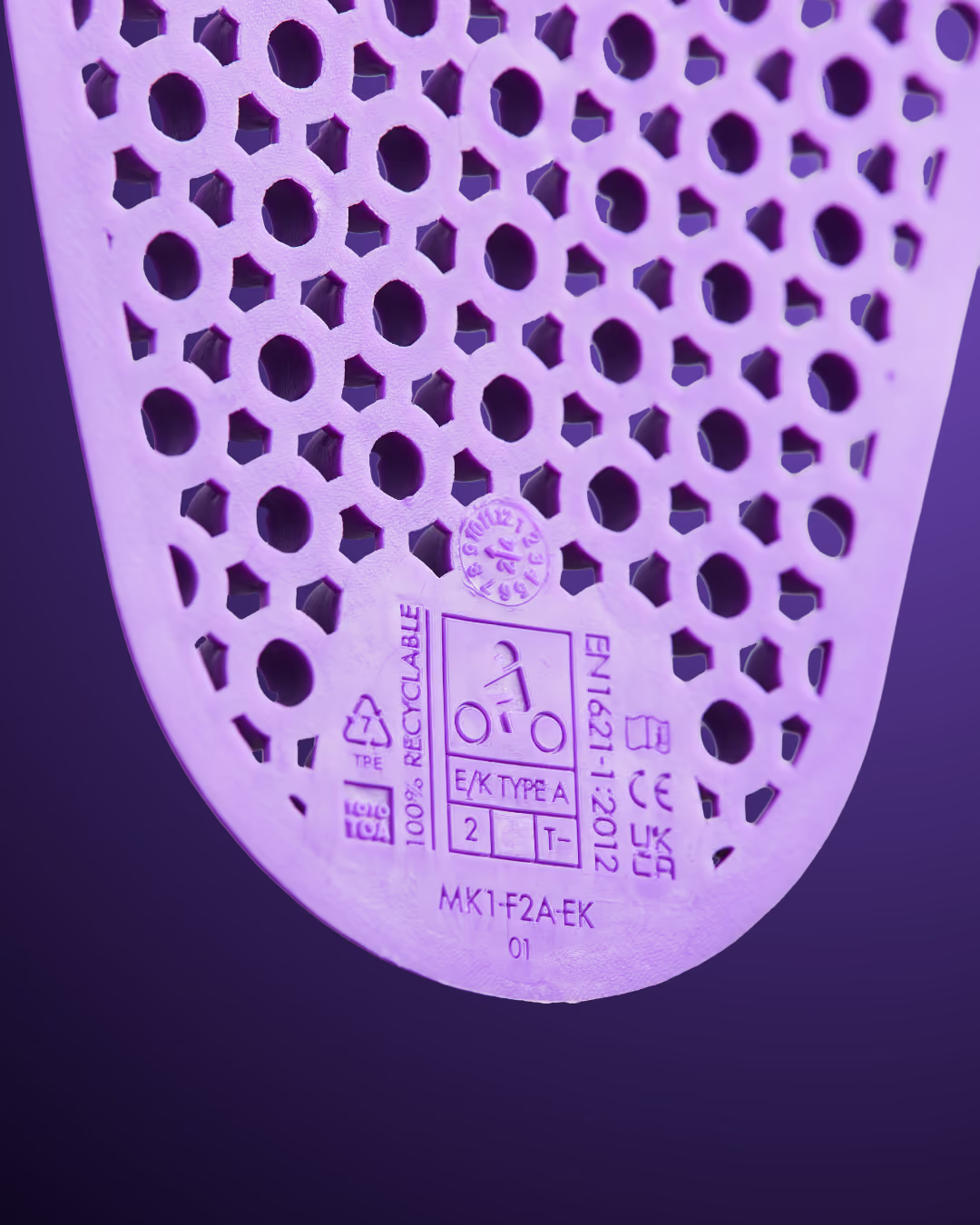
The specific standard we use for armour across motorcycle, mountain biking and ski equipment is EN 1621, the testing is split into different categories which will be covered later in the blog.
What is the process?
The process differs depending on what category your product falls into, and how much risk it carries if it fails.
For low risk items, such as basic gardening gloves, a self-certification is all that’s needed. This means they test the products against the relevant standard themselves and declare it compliant, without needing external sign-off.
However, high risk products (our armour included) need third party testing. This testing is carried out by an independent, accredited body known as a “notified body.” The manufacturer submits samples for testing, and only once it passes can the product legally carry the CE mark, and then be sold in the EEA. The testing process usually has to be repeated periodically, and if there are any changes to materials or design.
Why get CE tested?
Aside from it being a legal requirement for a large range of products, it provides some real benefits for both the company/manufacturer and the consumer. These include:
- Free movement: products can move freely between European member states without any trade barriers, so companies don’t need separate approval in each country.
- Protection: CE marking ensures a consistent, high standard of health, safety and environmental protection as the products tested have to comply with detailed, tested legislation.
- Market access: it acts as a passport for the whole of the EEA, or European market, giving brands easier access and distribution across the EU without having to jump through individual regulatory hoops.
- Consumer confidence: for the end user, it’s a quick and clear signal that a product has been through a formal safety process.
What's the difference between CE Level 1 and Level 2?
Talking technically, the level is determined by how many kiloNewtons (kN) are transmitted through the armour when force is applied. Put plainly, it's how much force gets absorbed, and how much left passes through to the wearer.
Different body parts are categorised into different groups, and the standards differ across the groups. This is because impact tolerance varies depending on what part of the body is being protected.
For Level 1 limb protectors (EN 1621-1), the average force transmitted has to be under 35kN, and no single hit can go over 50kN. Level 2 basically doubles that protection - average transmitted force has to stay under 20kN. So, same impact, way less force actually reaching you. Whereas, back protectors (EN 1621-2) have lower thresholds, for the exact same impact. Level 1 threshold is under 18kN, Level 2 under 9kN. And finally, the force threshold limits for chest protectors (EN 1621-3) are a maximum force of 18 kN for Level 1 and 9 kN or below for Level 2
What do EN 1621-1, -2, and -3 actually cover?
As mentioned at the start, the specific standard we use for armour across motorcycle, mountain biking and ski equipment is EN 1621. This is split across EN 1621-1, EN 1621-2, and EN 1621-3 depending on the area of the body the armour is protecting.
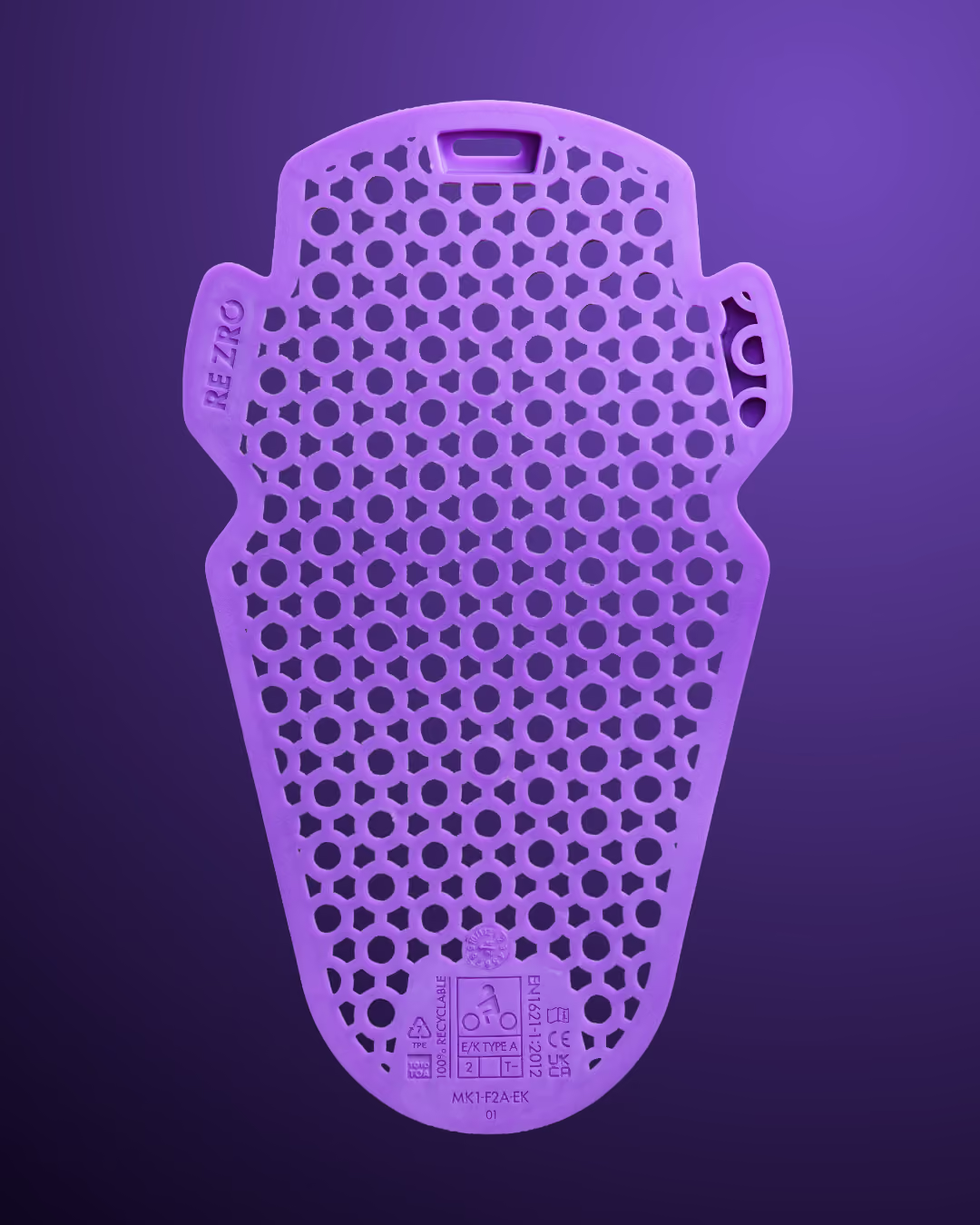
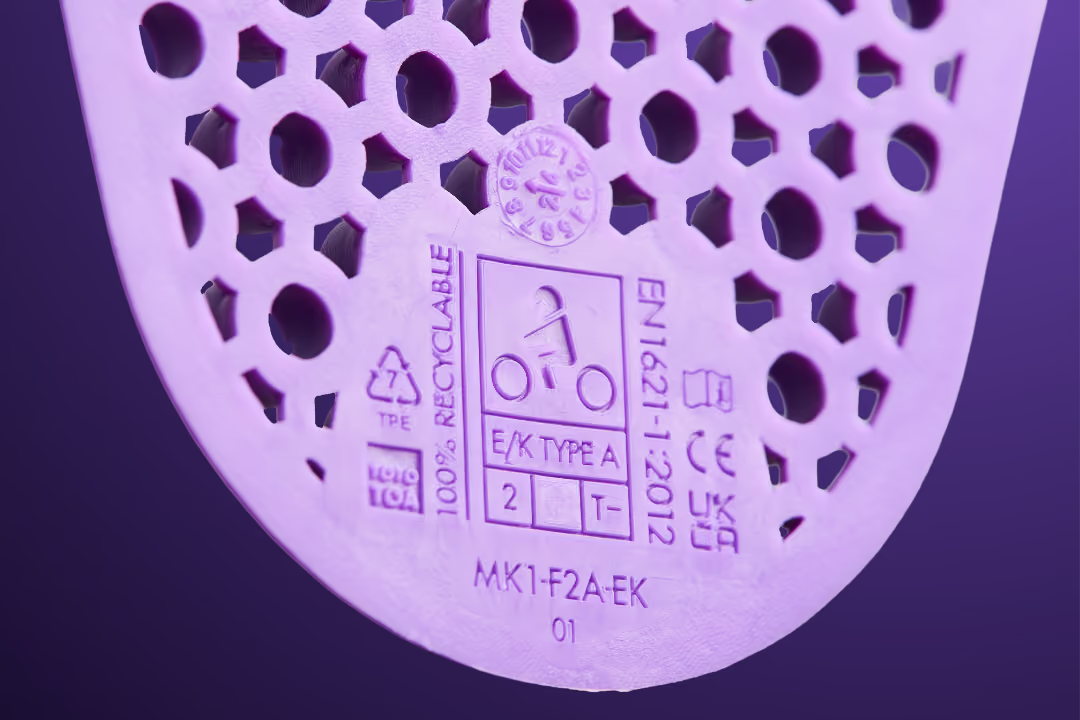
EN 1621-1: limb protectors (shoulders, elbows, hips, knees)
EN 1621-2: back protectors
EN 1621-3: chest protectors
As covered above, each has its own test method and thresholds, since the body handles impact differently at each of these zones. A test standard for the hips wouldn’t be appropriate for spine/back, and same again for the chest. This is why these are kept as three distinct categories.
Is Level 2 actually better than Level 1?
It’s easy to treat Level 1 and Level 2 as a good vs better upgrade, but the facts are a bit more nuanced than that.
As we know, the level is determined by how many kNs pass through the armour at force, so a Level 2 piece of armour would give you a higher level of impact protection. However, achieving that extra force reduction usually means more material or more structure, leading to thicker, heavier and less flexible armour.
Level 1 on the other hand tends to be more flexible, lower profile, and more comfortable. So for sports or activities where a higher range of motion and mobility are needed, Level 1 may be more suitable.
So it’s not as simple as just better or worse, they are just built for different types of movements and risk profiles. When choosing the right level for you, it comes down to matching the level to your sport - whether that’s MTB prioritising more flexibility, or racing enduro and leaning towards higher levels of impact protection.
To wrap it up
CE testing can seem like a maze of numbers and standards, but at its core it's simple: it's a legal safety baseline, verified independently, designed to make sure the protective gear you're wearing has actually been tested to withstand real impact.
It's not a guarantee of comfort, fit, or overall quality. But it is a guarantee that the product has met a recognised safety standard, tested by people who aren't the manufacturer with any potential bias.
Whether you're choosing Level 1 for flexibility or Level 2 for maximum force reduction, understanding what's actually being tested - and why - means you can make a more informed choice about the gear that's protecting you.
At RE ZRO®, all our armour is independently CE tested to the relevant EN standards, because when it comes to protection, we are committed to building armour that performs to the highest standards.
If you've got questions about which level or standard is right for your sport, get in touch at info@re-zro.com. We're always happy to talk armour.
References:
European Commission (2018) Regulation (EU) 2016/425 on personal protective equipment (PPE): Approval decisions under the PPE Regulation based on EC type-examination certificates. [online] Available at: https://ec.europa.eu/docsroom/documents/32681 (Accessed: 29 July 2026)
Williams, F (2023) CE Marking: What Products Do and Don’t Require The Mark? Authorised Representative Service. [online] Available at: https://www.authorisedrepresentativeservice.com/ce-marking-what-products-do-and-dont-require-the-mark/ (Accessed: 29 July 2026)
Doc Shipper (2026) CE Marking: Definitions, Requirements and Guide for 2026. [online\ Available at: https://docshipper.com/glossary/ce-marking-definition-logistics/ (Accessed 27 July 2026)
https://www.satra.com/ppe/EN1621.php






.svg)
.svg)
